
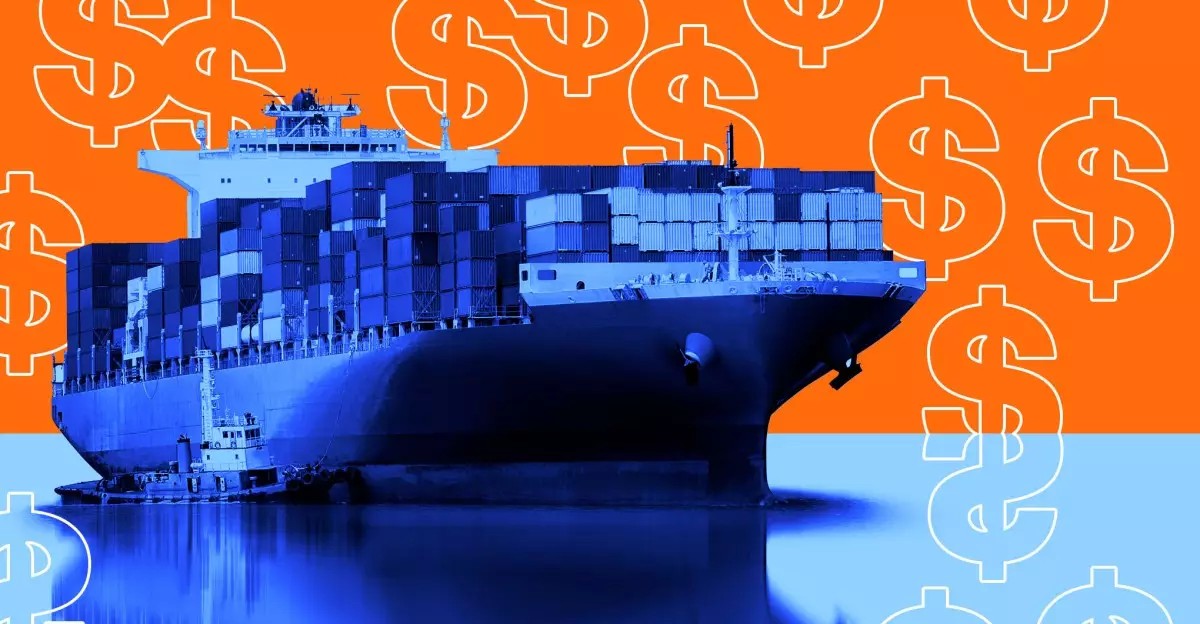
In a dramatic shift that has left many online shoppers and retailers reeling, on May 2nd, the United States government let the de minimis exemption on packages from China and Hong Kong lapse. This seemingly obscure policy, which allowed value-limited goods to enter the country without incurring tariffs, has played a pivotal role in shaping the landscape of international e-commerce. With the enactment of President Trump’s new tariff plan, the landscape of online shopping is changing, and not for the better.
The de minimis exemption has historically been a boon for American consumers who enjoy the convenience and affordability of directly shipping lower-value items from overseas. Prior to the policy shift, packages worth less than $800 would dodge import duties entirely, injecting vibrancy into the e-commerce ecosystem. This meant that online shopping platforms, like Temu and Shein, thrived as middlemen offering deep discounts to consumers, often without them being fully aware of the dependency on this regulatory loophole. Now, as tariffs loom large, the age of easy online shopping appears to be over.
Unexpected Costs: A Shock to Consumers and Retailers Alike
As of May 2nd, every low-value package entering the U.S. from China and Hong Kong will be subject to punitive tariff rates. Products priced below $800 that arrive through standard postal services such as USPS could face fees amounting to 90% of their value, or a flat $75 charge—whichever is higher. Those that utilize expedited shipping through companies like DHL are in for an even bigger shock, facing not only potential baseline tariffs but also additional product-specific fees which could skyrocket beyond 20%.
For the average American consumer, this translates to an unforeseen increase in the cost of everyday items. A quick look at online retail shows that several retailers aimed at budget-conscious shoppers are now wrestling with the stark reality of increased prices. As consumers begin to adapt to this new permutation, they may find themselves having to think twice before clicking ‘buy now.’ A market that thrived on penny-pinching bargains may soon feel the pinch as e-commerce is fundamentally altered by these new tariff structures.
The Chaotic Logistics Landscape: Will It Hold Up Under Pressure?
An alarming aspect of this policy change is how well the logistical framework is prepared to cope. The initial attempts to revoke the de minimis exemption were abruptly met with chaos, as postal services struggled to process an immense influx of packages. USPS even retracted a statement that temporarily halted shipments from China and Hong Kong, showcasing the fragmented nature of readiness for such sweeping changes.
Customs and Border Protection (CBP) is now grappling with the responsibility of managing millions of low-value packages entering the country daily. Experts estimate that the operational costs tied to processing these packages could eclipse $3.2 billion annually, raising the concerning question of whether U.S. customs infrastructure can handle this increased workload efficiently. The new provisions unclear on whether all packages will need comprehensive documentation, leave room for uncertainty and frustration among consumers.
Marketing Strategy Transformations: Adapting to a New Reality
For companies like Shein, Temu, and many others who have crafted their business models around appealing price points, the cessation of the de minimis exemption could trigger a fundamental re-evaluation of their marketing strategies. Historically, these businesses have profited by keeping costs low, directly appealing to a consumer base that craves affordable goods. With tariffs sure to ripple through supply chains, it will be vital for these companies to reassess pricing strategies, inventory management, and overall customer engagement.
Strategically, businesses may opt to do one of two things: either absorb these additional costs in the short term or pass them along to consumers. Either way, the ramifications are significant—less disposable income for shoppers could mean a reduction in overall spending, prompting a slow, creeping decline in sales across the e-commerce sector.
Illicit Trade: The Administration’s Rationale Under Scrutiny
The American administration has rationalized these drastic changes as necessary measures to combat illicit trade, particularly synthetic opioids, which have flooded the market. Yet, the efficacy of this rationale runs counter to the idea that simply slapping tariffs on low-value goods will make a tangible impact. The very mechanism designed to simplify commerce could become a hindrance in effectively tackling these serious issues, highlighting an almost paradoxical situation where increased regulation may lead to unanticipated consequences. The challenge of intercepting illegal products requires more nuanced strategies than just imposing increased tariffs.
As consumers brace for higher prices, the convergence of this new tariff reality, a chaotic logistics infrastructure, and evolving business models prompts a profound reexamination of online shopping—what has become second nature for many. The echoes of these policy changes will undoubtedly resonate long into the future, shaping not just how, but what Americans buy online.
Leave a Reply