
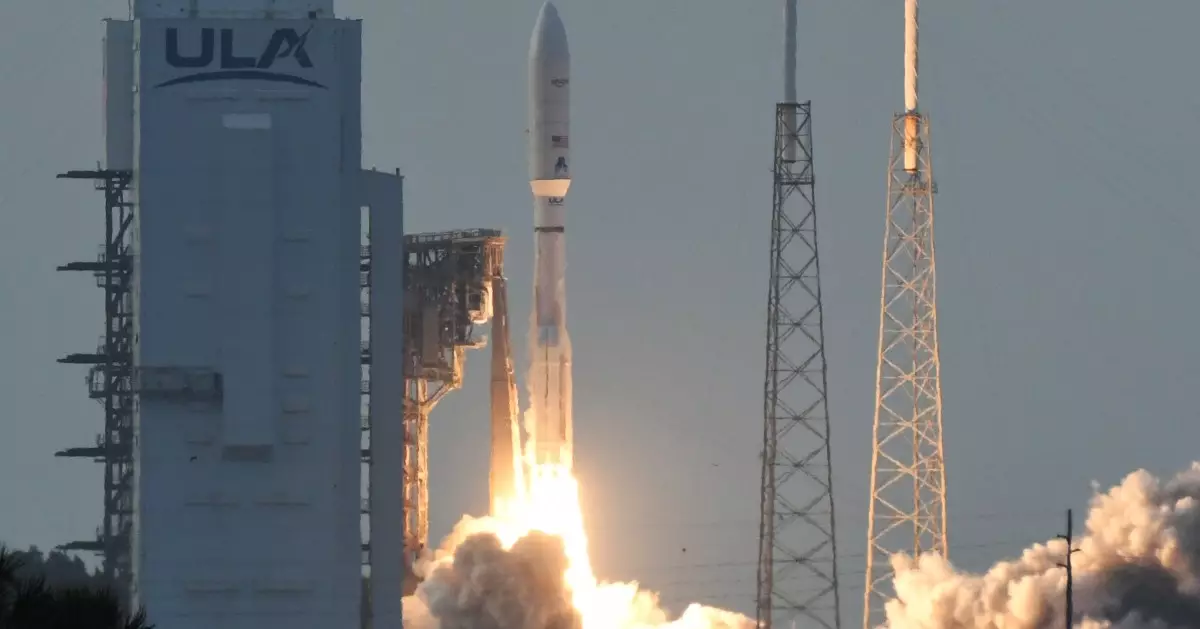
In an era where connectivity defines global interactions, Amazon’s Project Kuiper is taking significant strides to redefine how internet access is delivered. The recent launch of the first 27 satellites signifies not just a technological achievement but also underscores the urgency and ambition behind this project. With a goal of deploying over 3,000 satellites into low-Earth orbit, Amazon seeks to emerge as a formidable competitor in the domain of satellite internet, currently dominated by SpaceX’s Starlink. This aggressive push is a testament to Amazon’s long-term vision of enhancing access to high-speed, low-latency internet, opening doors for millions who have been left in the digital dark.
The idea behind Project Kuiper is ripe with promise. By establishing a satellite constellation that orbits at an altitude of 280 miles (450 kilometers), Amazon aims to bridge the gap in broadband access, especially in underserved regions. While the company’s ambition is commendable, one cannot overlook the daunting reality of competing against an already established giant like SpaceX. With over 7,200 Starlink satellites already operational and plans for expansion, Amazon’s challenge lies not only in launching its satellites but also ensuring that the technology works seamlessly to deliver efficient and reliable service.
A Journey of Innovation and Resilience
The recent launch from Cape Canaveral Space Force Station, although successful, was marred by earlier delays due to poor weather conditions. Such setbacks are emblematic of the complex challenges that come with launching satellite technology into space. Amazon CEO Andy Jassy has rightly highlighted the tremendous effort and innovation that went into this launch. It’s not merely a matter of getting satellites into orbit; it’s about ensuring they function correctly and integrate smoothly with existing ground infrastructure.
Yet, amidst these challenges lies a more significant question: Is Amazon prepared for the rigorous demands of the satellite internet market? The stakes are high, and the timeline is pressing. According to the Federal Communications Commission (FCC), Amazon must have 1,618 satellites deployed by mid-2026—a substantial benchmark to hit if the company wants to establish a foothold in this competitive landscape. The imminent pressure to succeed amplifies the challenges, and their operational speed must match or exceed that of their competitors to make any meaningful impact.
The Satellite Landscape: A Crowded Future
The satellite landscape is becoming increasingly congested, and with an influx of entrants, it raises concerns about space traffic management and orbital debris. With SpaceX announcing completion of its 50th Starlink mission and aspirations for up to 34,400 satellites, the competition is fierce. Companies like France’s Eutelsat and China’s Spacesail are also stepping into this arena, looking to carve out niches in satellite broadband. However, with each launch, the risks associated with orbital collisions and space debris escalate, presenting existential challenges to not just competition but also to space sustainability.
Moreover, the operational expectations for Project Kuiper will extend beyond merely competing with Starlink; it will require a robust infrastructure capable of supporting a vast satellite network. ULA CEO Tory Bruno emphasized the modifications made to launch facilities, hinting at the scale of commitment needed going forward. Amazon must not only match the speed of deployment but also ensure their service remains operational and reliable across diverse geographic locales.
Looking Ahead: The Promise and Perils of Satellite Internet
The potential impact of Project Kuiper on global connectivity is profound. By offering satellite internet technologies, Amazon could quite literally change lives for those in remote or rural areas who currently struggle for reliable internet access. This extends opportunities in education, commerce, and social connectivity, aligning with broader societal goals of digital inclusivity. Yet, along with this promise comes the peril of a gene pool crowded with satellites, potentially leading to more complications around regulation, user experience, and technological innovation.
Ultimately, Amazon’s Project Kuiper marks an important chapter in the evolution of satellite internet, but whether it will flourish amid these formidable challenges remains to be seen. Success will not merely be measured by how many satellites can be launched, but rather by how effectively they can transform the digital landscape for the betterment of humankind.
Leave a Reply